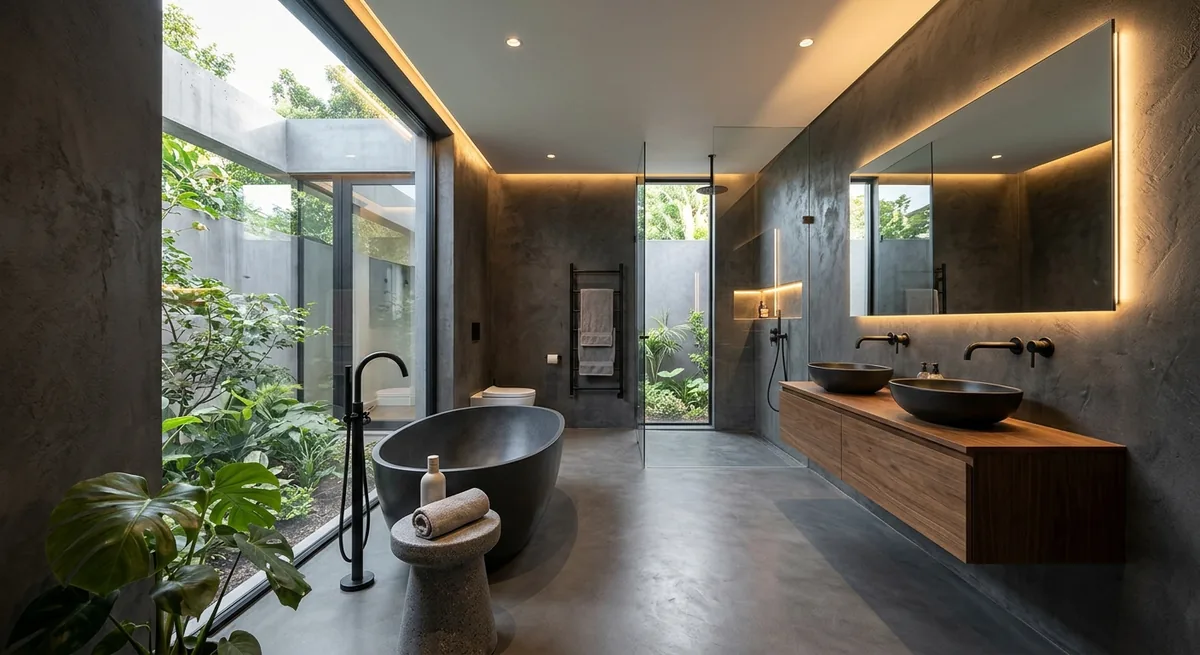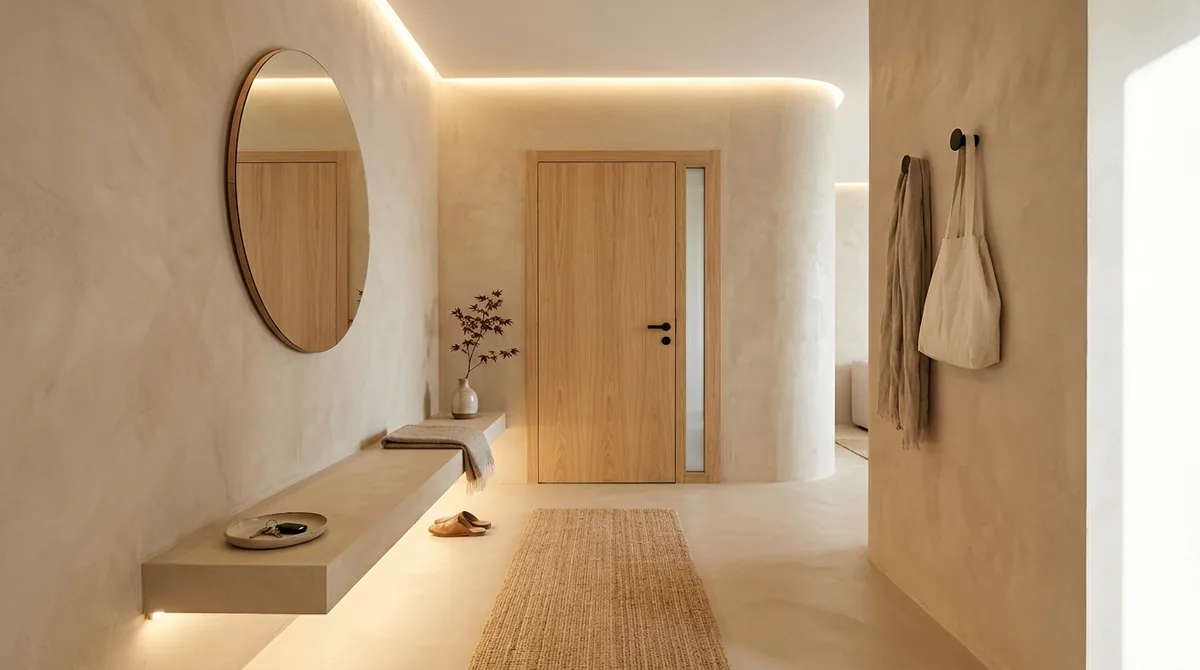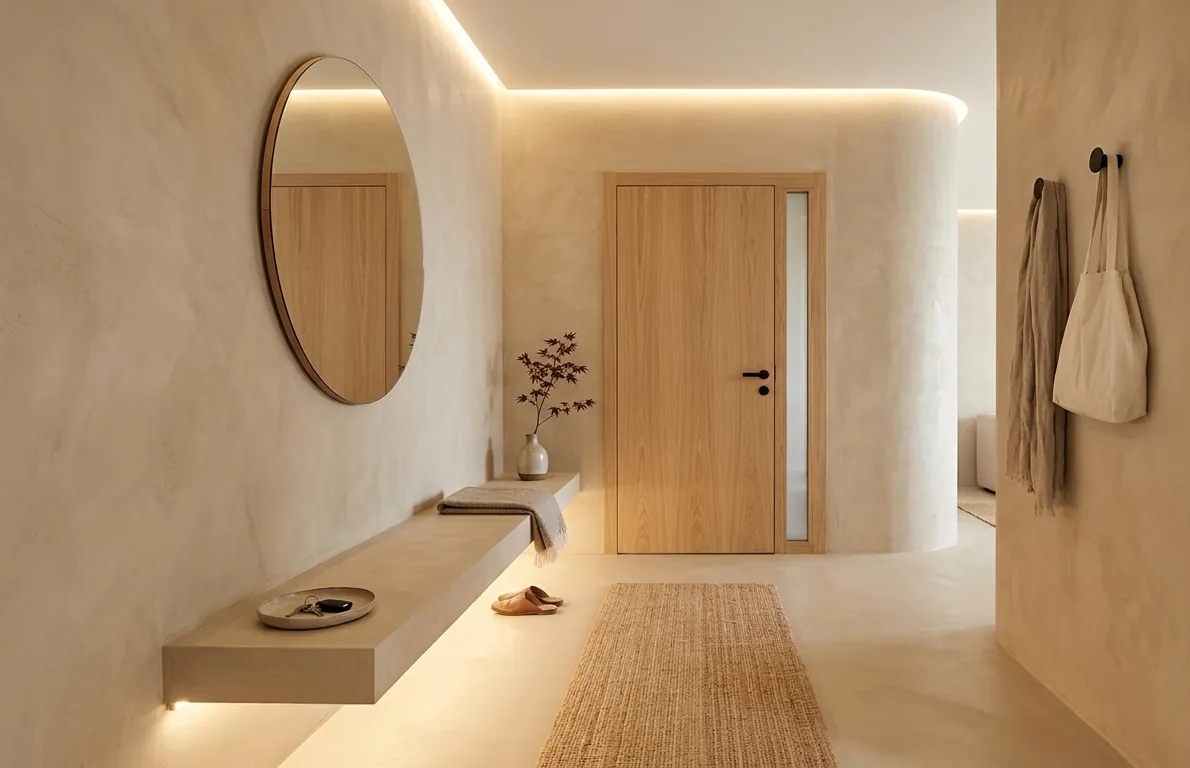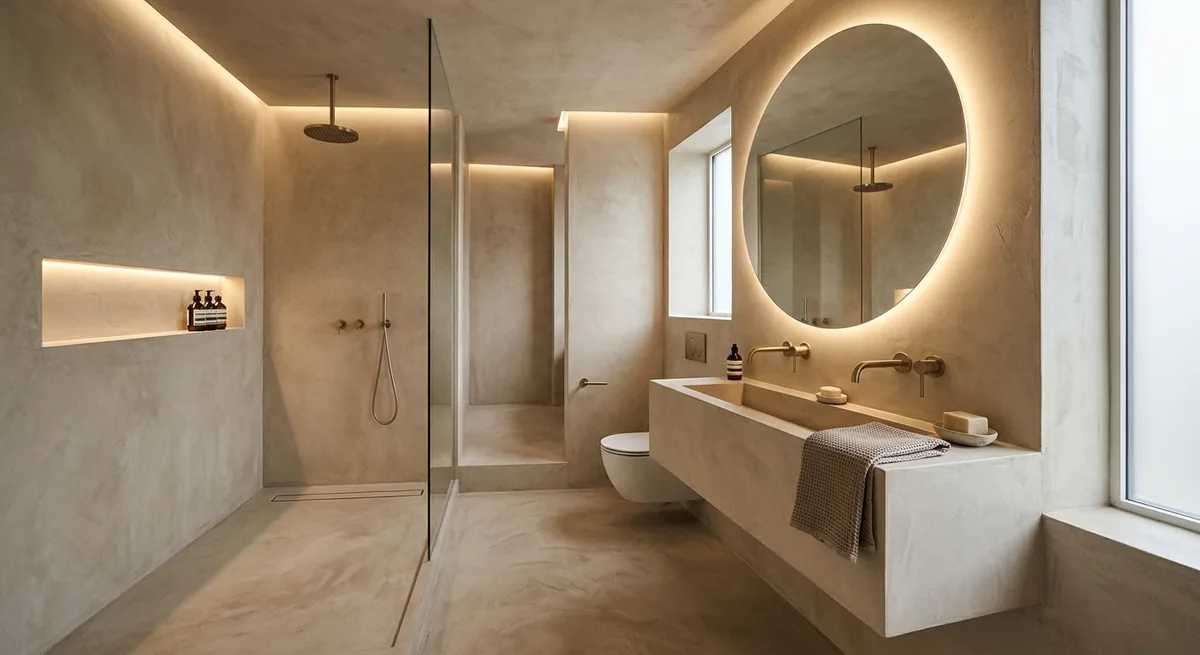
Microcement is a cement-based decorative coating applied in several thin layers to walls, floors and furniture. Its total thickness is only 2–3 mm, and the result is one continuous, joint-free surface with a soft, natural look reminiscent of stone or concrete.
What it is made of
At its core, microcement is cement mixed with fine mineral aggregates, polymers and pigments. The polymers improve adhesion and flexibility, while the pigments provide the colour. Thanks to its fine composition, the material can be applied in very thin layers without losing strength.
How the coating is built up
Microcement is a system of several layers, each with its own role:
- Primer – prepares the base and ensures adhesion.
- Base coats – with a coarser grain, they give the coating its strength.
- Finishing coats – with a finer grain, they create the texture and colour.
- Protective varnish – seals the surface against moisture, stains and wear.
Some systems also embed a reinforcing mesh between the layers to reduce the risk of cracks. Each layer is applied by hand with a trowel, so every surface is unique – with subtle variations in tone that give it depth.
Key advantages
- No joints – there are no joints for moisture and dirt to collect in.
- Minimal thickness – it is applied over an existing base without noticeably raising the floor level.
- Water resistance – sealed with a suitable varnish, it is suitable for bathrooms and showers.
- Versatility – it can be applied to walls, floors, stairs, countertops and furniture.
- Design freedom – a wide range of colours and textures.
Limitations worth knowing
Microcement needs a stable base – if the base moves or cracks, this can affect the coating too. The surface is durable but not completely resistant to scratches and harsh chemicals, and the final result depends heavily on the skill of the person applying it.
Where it is used
Microcement is most often chosen for bathrooms and showers, floors and walls in living rooms and entrance halls, stairs, kitchen countertops and bespoke furniture. It is also used in offices, shops and restaurants, where a seamless surface is practical and easy to maintain.
Microcement or polished concrete?
The two materials look similar but differ significantly. Polished concrete is a full concrete slab several centimetres thick, poured and ground on site. Microcement is a thin coating of a few millimetres applied over an existing base – which is why it suits renovations as well as walls and furniture.