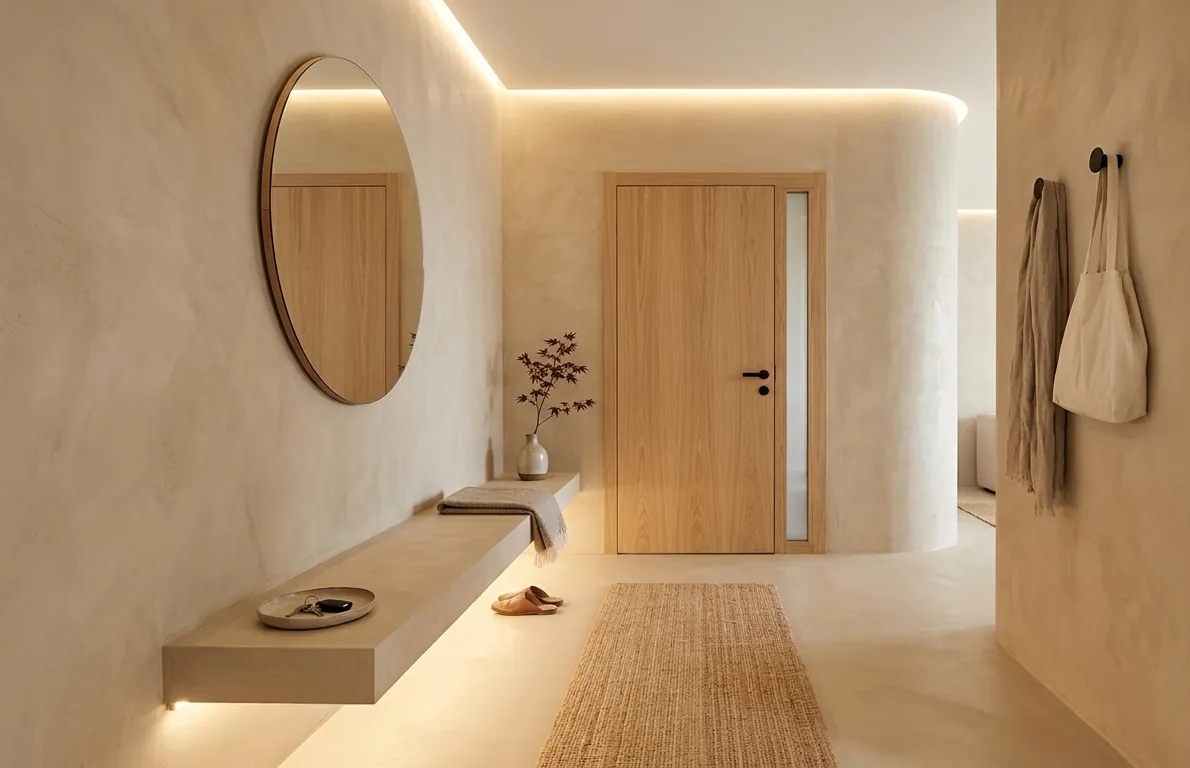
One of the most common questions when renovating a bathroom or floor is whether microcement can be applied directly over the old tiles. The short answer is yes – as long as the tiles are firmly bonded.
When it is possible
Microcement is applied over tiles that are firmly bonded and have no voids. That way the bathroom, floor or stairs are renewed without demolition, without noise and dust, and without construction waste.
When it is not suitable
If the tiles are cracked, loose or hollow, the base is not stable and they need to be repaired or removed before application. That is why the condition of the base is always checked on site before work begins.
How the application works
- The tiles are cleaned and degreased.
- The grout lines are filled and the surface is primed.
- Microcement is applied by hand in several thin layers – 2–3 mm in total.
- The surface is sealed with a protective varnish.
In shower areas, microcement is applied over a waterproofing membrane and sealed with polyurethane varnish, so the surface becomes waterproof.
Will the floor level rise?
Only minimally – microcement is just 2–3 mm thick, so the difference is barely noticeable.
How long it takes
It depends on the area and the condition of the base, as each layer needs time to dry before the next one is applied.
Why it is a good choice for renovations
Applying over tiles saves the demolition, the removal of debris and a new screed. The result is a modern seamless surface, and the room is renewed faster and more cleanly.